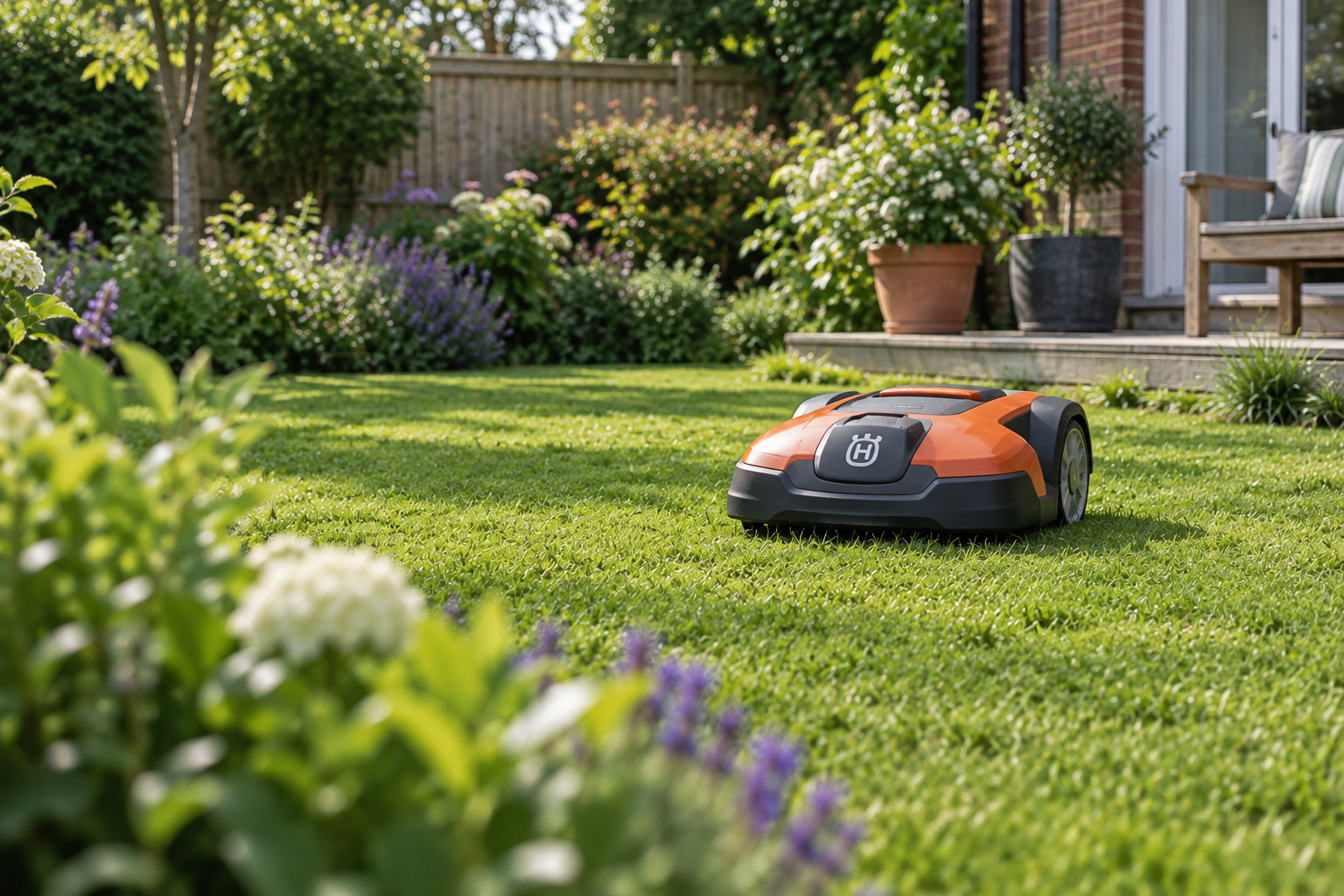
A robot lawn mower can remove one of the most repetitive garden jobs, but it isn’t automatically good value for every lawn. The real calculation is more than comparing its purchase price with a conventional mower.
You need to consider installation, electricity, replacement blades and batteries — then weigh those costs against the time saved and how often you currently mow.
The quick answer
A robot mower is most likely to be worth it if you mow regularly, value your free time and have a garden the mower can manage largely without intervention. It becomes harder to justify if your lawn is tiny, rarely mown or requires you to constantly rescue or move the robot between areas.
In this guide
What does a robot lawn mower really cost?
The advertised price is only the starting point.
When comparing the cost of different mowers, include:
- The mower itself
- Charging station and power supply if not included
- Boundary wire or navigation accessories where required
- Professional installation if you don’t want to install it yourself
- Replacement blades
- Eventually, a replacement battery
Wire-free models can remove the work involved in installing perimeter cable, but that doesn’t necessarily make them cheaper. RTK, LiDAR and advanced vision systems can increase the initial purchase price.
The better question is therefore not “How cheap is the mower?” but “What will this garden cost me to automate properly?”
Are robot lawn mowers expensive to run?
Electricity is normally a relatively small part of ownership compared with the purchase price.
The exact consumption depends on mower size, battery capacity, lawn area, mowing schedule and charging efficiency, so be cautious with websites quoting one universal annual figure.
A useful way to estimate your own cost is:
Annual electricity used (kWh) × your electricity tariff = estimated annual electricity cost.
If a manufacturer publishes typical energy consumption for the mower, use that figure rather than an estimate based on a completely different model.
Also remember that a robot mower cuts frequently. Comparing the electricity for one mowing session with one session using a conventional mower doesn’t tell you much about the annual cost.
What needs replacing?
Blades
Robot mower blades are consumable parts. How quickly they wear depends on the blade design, mowing hours and what they encounter on the lawn.
Twigs, stones, exposed roots and other debris can shorten blade life.
Replacement blades are generally a modest expense, but they should still be included when comparing long-term ownership costs.
Battery
The rechargeable battery will also eventually lose capacity.
That doesn’t mean you’ll automatically need a new mower. On models with replaceable batteries, a battery can be treated as a longer-term maintenance item.
Before buying an expensive mower, it is worth checking whether the battery can be replaced, how servicing works and whether spare parts are readily available in the UK.
Cleaning
Robot mowers still need some attention. Grass can accumulate underneath the machine and around the cutting system, particularly after wet mowing.
Automation means less mowing work — not zero maintenance.
How much time could a robot mower actually save?
This is where the calculation becomes personal.
Suppose mowing normally takes you 45 minutes and you cut the lawn once a week for 30 weeks of the year.
That’s around 22.5 hours spent mowing each year, before including getting the mower out, putting it away and disposing of clippings.
Over five years, that’s more than 100 hours.
A larger lawn taking 90 minutes each week could make the time saving considerably greater.
Of course, a robot mower won’t give every minute back. You’ll still need to inspect the lawn, clean the machine, change blades and occasionally deal with problems.
But comparing hours saved as well as pounds spent gives a much more realistic picture of its value.
See what robot mowers suit your lawn
Use your lawn size, slopes and priorities to narrow down suitable models before comparing prices.
When is a robot mower most likely to be worth it?
The strongest case is usually a lawn that needs frequent mowing and can be automated without much intervention.
- You have a medium or large lawn that takes significant time to mow
- You want the grass maintained consistently rather than cutting it when it gets long
- You dislike mowing or would rather spend the time elsewhere
- The mower can reach most or all lawn areas automatically
- You are comfortable paying more upfront for convenience
There can also be a benefit to the lawn itself. Frequent cutting removes small amounts of grass rather than repeatedly allowing it to become long, helping maintain a consistently neat appearance.
When might a robot mower not be worth it?
A robot mower isn’t automatically the sensible choice simply because the technology is impressive.
Think carefully if:
- Your lawn takes only a few minutes to mow
- You genuinely enjoy mowing it yourself
- The garden contains several inaccessible lawn areas requiring manual carrying
- You would need major landscaping changes purely to accommodate the mower
- You only mow occasionally and don’t care about a consistently maintained finish
A £1,000+ mower saving ten minutes every fortnight is a very different proposition from the same mower replacing hours of mowing on a larger garden.
Don’t value a robot mower only by payback period
A robot mower usually isn’t an investment that generates a financial return. For most households, it is a convenience purchase.
That makes it more comparable with a dishwasher than a financial investment: you’re paying a machine to repeatedly perform a task you would otherwise do yourself.
If you currently pay someone to mow your lawn, there is a clearer financial comparison. Add up what you spend on mowing over several years and compare it with the mower’s purchase, installation and maintenance costs.
So, is a robot mower worth buying?
For the right garden, the strongest reason to buy one is time rather than electricity savings.
Calculate how many hours you currently spend mowing each year, check what it would cost to automate your particular garden properly, and consider how much manual intervention would remain.
If the mower can handle most of the lawn autonomously and you’re happy with the upfront cost, the convenience can be substantial. If you’ll constantly carry, rescue or supervise it, much of that value disappears.
Find the right robot mower for your garden
Use your lawn size, slopes and priorities to narrow down suitable models, or compare robot mowers side by side.